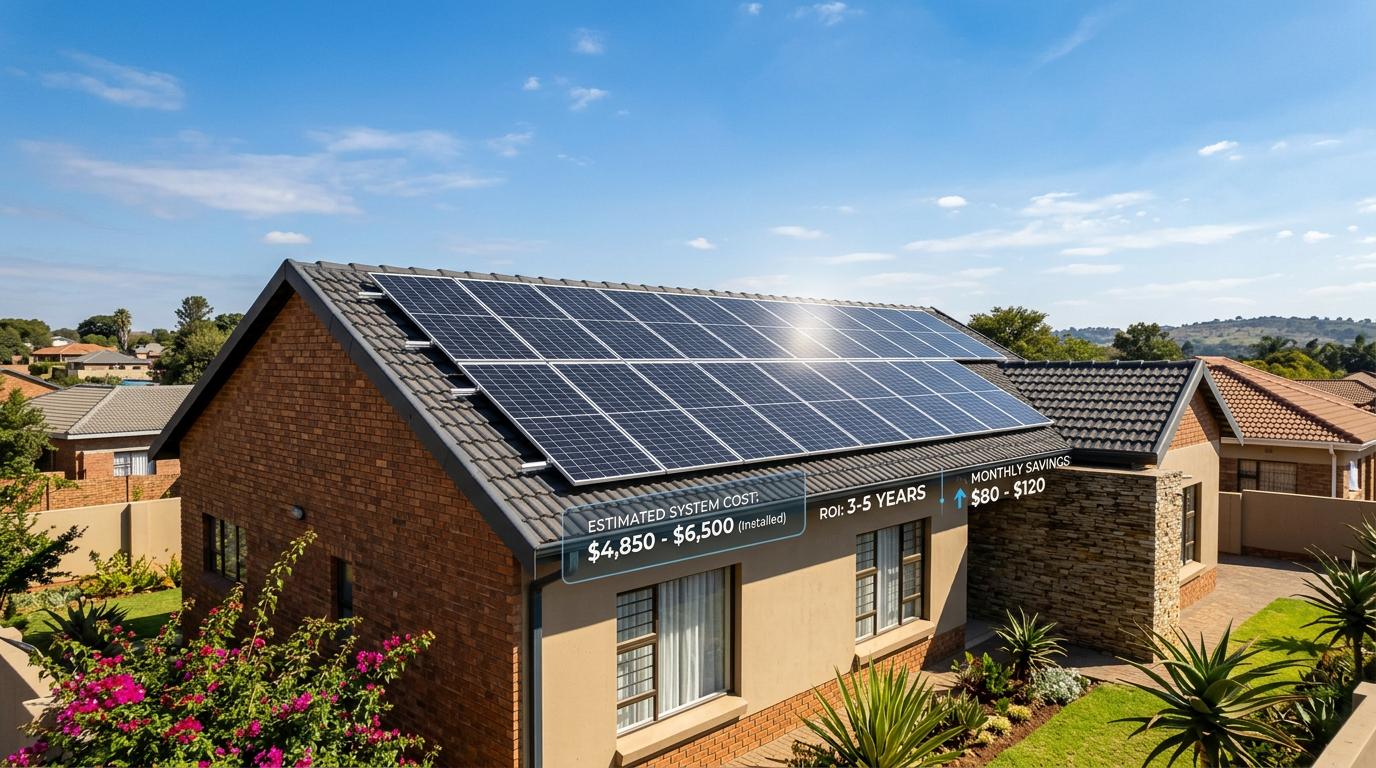
The short answer: a complete solar system for a typical Bulawayo home costs between USD 1,500 and USD 8,000. The range is wide because the final price depends on how much power you need, what battery technology you choose, and which equipment brands are available at the time of your quote.
That probably does not narrow it down enough. So let me walk through exactly what drives the cost, what you can expect for different budgets, and how to make sure you are getting a fair deal.
What Determines the Price of a Solar System?
Five things affect what you will pay. Understanding them means you will not be surprised when you see a quote.
System size. This is measured in kilowatts (kW) for the panels and kilovolt-amperes (kVA) for the inverter. A small flat needs 2-3kVA. A three-bedroom house with normal appliances typically needs 5kVA. A larger home or one with air conditioning and electric geysers might need 8-10kVA. Bigger system, higher cost.
Battery capacity. Batteries are usually the single most expensive component. A system with enough battery storage to last through an eight-hour load shedding window costs more than one designed for four hours. Lithium batteries (LiFePO4) cost roughly double what sealed lead-acid batteries cost upfront, but they last two to three times longer.
Equipment brands. There is a genuine quality difference between budget and premium equipment. A Deye or Growatt inverter costs less than a Victron, but all three work. The key is understanding what you need and what you can afford. A good installer will explain the trade-offs honestly.
Installation complexity. A single-storey house with a clear north-facing roof is straightforward. A double-storey building with complex roof angles, long cable runs, or tricky mounting requirements adds labour time and materials.
Currency and import costs. Nearly all solar equipment in Zimbabwe is imported. Exchange rate movements and shipping costs change month to month. A system quoted in March might cost differently in July. This is normal and not something any installer can avoid.
Typical Price Ranges for Bulawayo Homes
These are ballpark figures based on the current market. They include panels, inverter, batteries, mounting, wiring, and installation labour.
Small backup system (2-3kVA): USD 1,500 to 3,000. Enough to run lights, TV, Wi-Fi router, phone chargers, and a fridge during load shedding. Good for flats and small homes.
Mid-range home system (5kVA): USD 3,000 to 5,500. Powers a typical three-bedroom home through load shedding. Can run most appliances except high-draw items like electric geysers and large air conditioners. This is the most popular size in Bulawayo right now.
Larger home system (8-10kVA): USD 5,500 to 8,000+. For bigger homes, homes with higher electricity usage, or anyone who wants to run almost everything on solar. Can handle air conditioning, multiple fridges, and more demanding loads.
Why Prices Change Month to Month
If you got a quote from another company six months ago and it seems different from what you hear today, this is why. Solar equipment prices in Zimbabwe are tied to import costs. When the rand or the US dollar moves against the currencies used by manufacturers in China, wholesale prices shift. When shipping container costs go up globally, that flows through to the retail price in Bulawayo.
This is not a tactic. It is the reality of doing business in a country that imports nearly all its solar equipment. Any installer who gives you a "guaranteed price" months in advance is either absorbing the risk (and charging you for it) or planning to cut corners later if costs rise.
How to Avoid Overpaying
Get at least two quotes. Make sure each quote breaks down the cost by component so you can compare like for like. Ask what brand of inverter, panels, and batteries are included. Ask whether installation and wiring are included or extra. A written quote with equipment specifications is the minimum you should expect from any installer.
Be cautious of quotes that seem too cheap. Extremely low prices usually mean low-quality batteries (which fail within 12-18 months), undersized wiring, or corners cut on mounting and earthing. The installation might work for a few months, then start causing problems that cost more to fix than doing it properly would have cost in the first place.
Get a Real Quote for Your Home
Ballpark figures are useful for budgeting, but the only way to know what your system will cost is to get a quote based on your actual home and usage. Our team does free site assessments across Bulawayo. We will look at your roof, understand what you need, and give you a written quote with full equipment specifications and no hidden extras.
Get your free quote here, or WhatsApp us directly. For more detail on system types and what is included, see the full pricing guide.