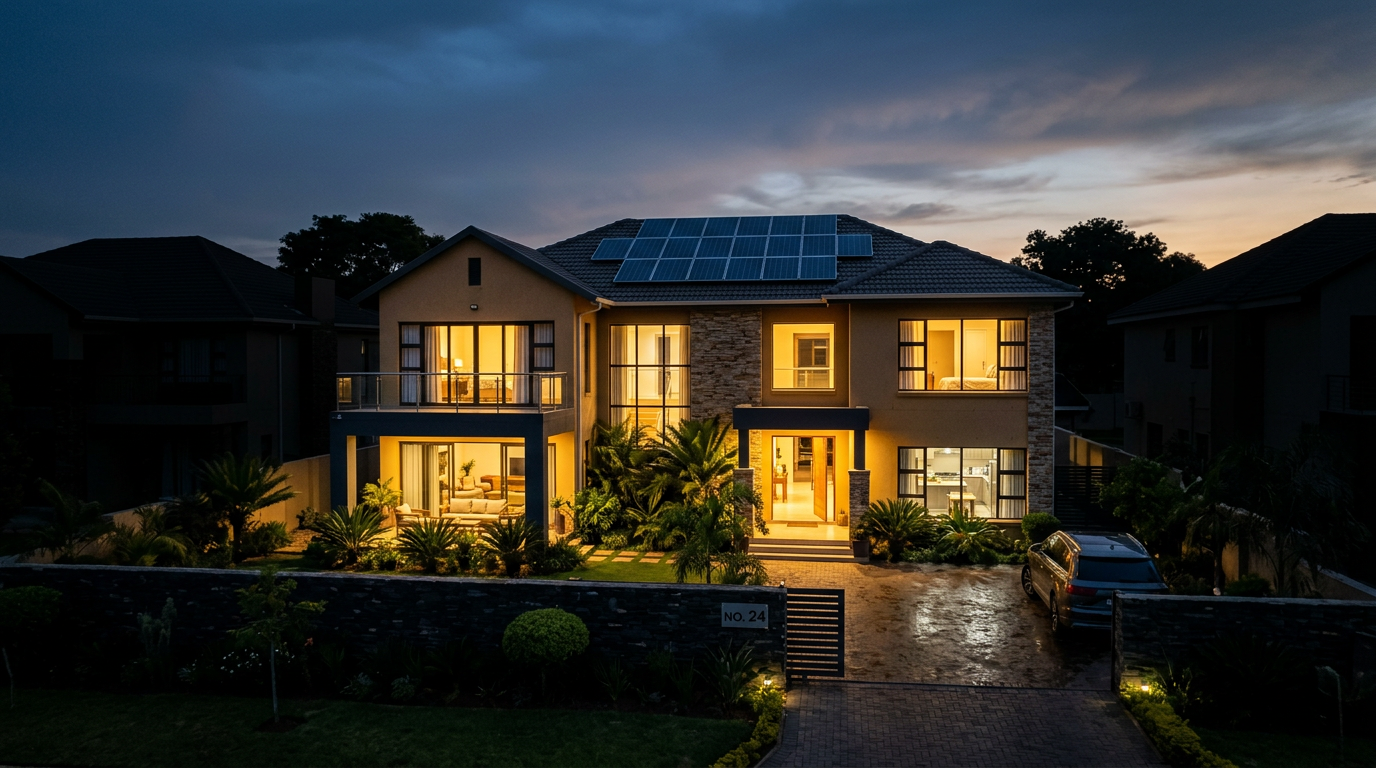
Load Shedding Solutions in Bulawayo. Stay Powered Up.
A solar backup system charges during the day and powers your home when ZESA cuts out. Our team installs battery backup and hybrid solar systems across Bulawayo that automatically switch on when load shedding starts. No fumbling with generators, no fuel costs, no noise.
Three Ways to Beat Load Shedding
The right solution depends on your budget, how long your outages last, and whether you also want to cut your electricity bill.
Pure Battery Backup
An inverter and batteries with no solar panels. Charges from ZESA when power is available and runs your home when load shedding hits. The most affordable entry point.
Indicative range: USD 800 to USD 2,500
Hybrid Solar
Solar panels, inverter, and batteries working together. Charges from the sun during the day, stores excess in batteries, and switches to battery when ZESA cuts out. Also reduces your electricity bill.
Indicative range: USD 2,000 to USD 6,000
Off-Grid Solar
Fully independent of ZESA. Your home runs entirely on solar power with a large battery bank for overnight and cloudy days. Best for areas where the grid is unreliable or unavailable.
Indicative range: USD 5,000 to USD 15,000+
| Option | Solar Panels | Grid Independence | Best For | Cost Range |
|---|---|---|---|---|
| Pure Battery Backup | No | Partial | Short daily outages, lower upfront budget | USD 800 to USD 2,500 |
| Hybrid Solar | Yes | High | Longer outages, wants to cut electricity bills too | USD 2,000 to USD 6,000 |
| Off-Grid Solar | Yes (larger array) | Complete | Areas with unreliable grid, farms, remote properties | USD 5,000 to USD 15,000+ |
What Can You Run on a Backup System?
Here is a guide to common household appliances and whether a 3kVA or 5kVA system can handle them.
| Appliance | Approx. Watts | 3kVA System | 5kVA System |
|---|---|---|---|
| LED lights (10 bulbs) | 100W | Yes | Yes |
| TV (LED, 42 inch) | 80W | Yes | Yes |
| Laptop | 65W | Yes | Yes |
| Fridge/Freezer | 150W | Yes | Yes |
| Ceiling fan | 75W | Yes | Yes |
| WiFi router | 15W | Yes | Yes |
| Phone charging (x4) | 40W | Yes | Yes |
| Microwave | 1,000W | No | Yes |
| Kettle | 2,000W | No | Yes |
| Geyser | 2,000W | No | No |
| Air conditioning | 1,500W+ | No | No |
Note: running multiple high-draw appliances simultaneously will exceed system capacity. Our team designs your system based on what you actually need to run.
Our team's Recommendation for a Typical Bulawayo 3-Bedroom Home
For most 3-bedroom homes in Bulawayo dealing with daily load shedding, our team recommends a 5kVA hybrid system with a 10kWh lithium battery bank and 4 to 6 solar panels.
This setup will run your lights, TV, WiFi, fridge, fans, and phone charging through load shedding. The panels charge the batteries during the day, so you are using free energy from the sun rather than paying ZESA to charge your batteries.
With ZESA load shedding schedules affecting Bulawayo daily, many families are choosing hybrid solar as a permanent solution rather than a temporary fix.
Load Shedding Questions
Don't wait until the next outage. Get a quote now.
Our team will design a backup system that fits your home and your budget. No obligation.